
What to Look for in a Cryogenic Embryo Container Supplier
Choosing a cryogenic embryo container supplier isn’t just another procurement decision. It’s not like comparing office chairs or lab gloves. These containers hold something much more valuable, future families. They protect embryos, oocytes, sperm, and reproductive tissue that patients trust will stay safe for years, sometimes decades. So, this choice deserves more than just a […]
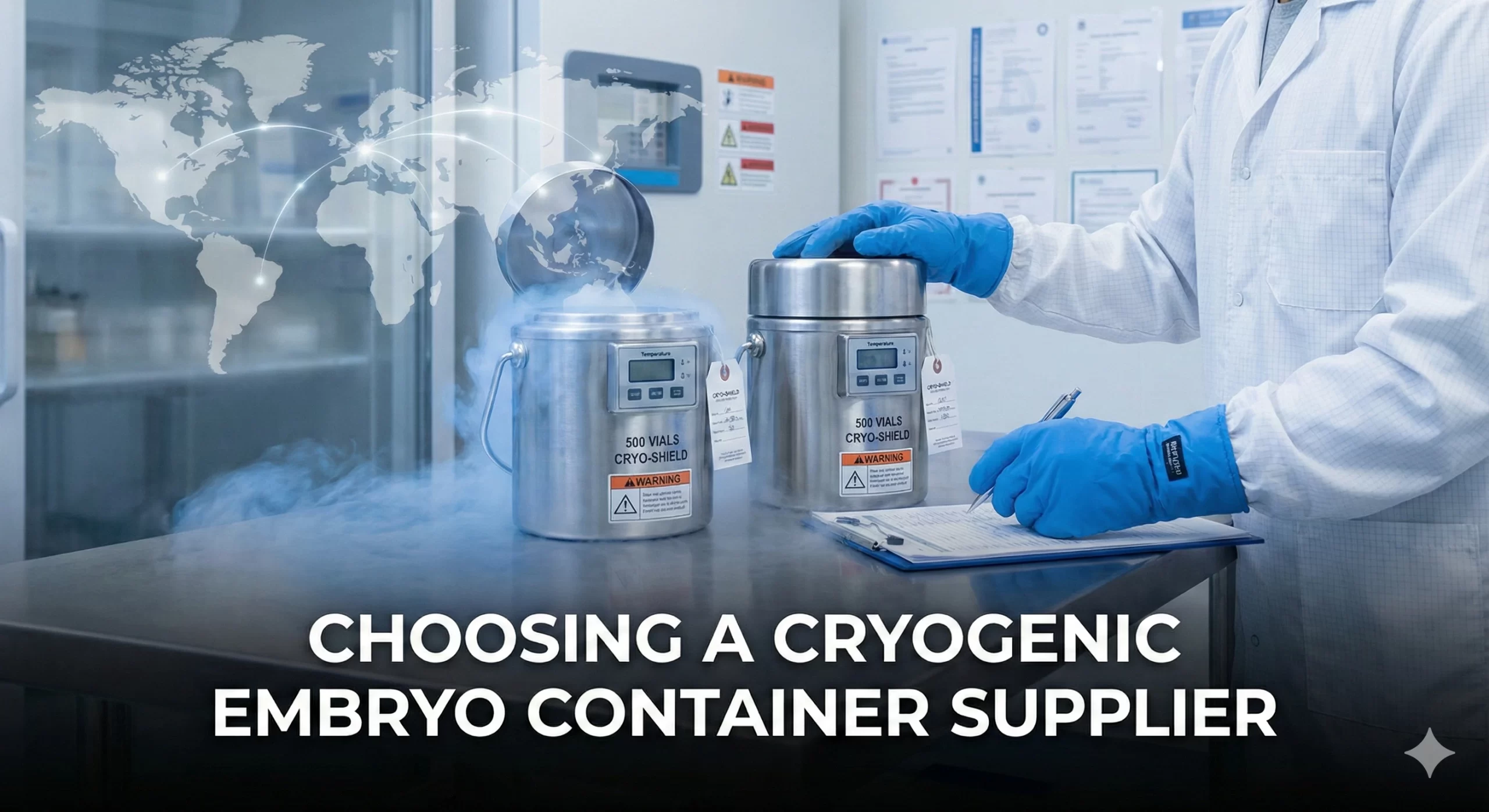
Choosing a cryogenic embryo container supplier isn’t just another procurement decision. It’s not like comparing office chairs or lab gloves. These containers hold something much more valuable, future families. They protect embryos, oocytes, sperm, and reproductive tissue that patients trust will stay safe for years, sometimes decades.
So, this choice deserves more than just a quick price comparison. The right supplier should offer reliability, transparency, technical support, and long-term service, not just a product with a shipping label. If you're evaluating suppliers and trying to understand what really matters, let’s break it down together in a way that feels practical rather than overwhelming.
Factors to Look for When Choosing Cryogenic Embryo Container Supplier
1. Proven Reliability and Quality Standards
The first thing to look for is whether the supplier can prove, not just claim, that their containers are made to last. Cryogenic storage involves extremely low temperatures (around –196°C), so any flaw in insulation or material can eventually compromise stored samples.
Look for:
- Strong manufacturing quality control
- Regulatory compliance
- Long-term performance data
- Certifications (CE, ISO, FDA-related guidelines, etc.)
It’s not rude to ask for testing results or lifespan data, it’s responsible. A supplier who takes cryogenic safety seriously will always have documentation ready.
2. Experience in the Industry
A container supplier that specializes in reproductive cryogenic storage is always better than one selling to multiple unrelated industries. Fertility preservation requires a unique level of precision, consistency, and ethical responsibility.
A supplier with experience in embryo cryopreservation will understand:
- Industry best practices
- Required temperature stability
- Ideal nitrogen retention ranges
- Long-term risk management
- Storage trends and upgrade cycles
If they can speak your language, vapor phase, alarm systems, vacuum integrity, LN2 efficiency, you’re in the right place.
A container supplier that specializes in reproductive cryogenic storage is always better than one selling to multiple unrelated industries. Fertility preservation requires a unique level of precision, consistency, and ethical responsibility.
A supplier with experience in embryo cryopreservation will understand:
- Industry best practices
- Required temperature stability
- Ideal nitrogen retention ranges
- Long-term risk management
- Storage trends and upgrade cycles
If they can speak your language, vapor phase, alarm systems, vacuum integrity, LN2 efficiency, you’re in the right place.
With over 40 years of experience and more than one million successful shipments, we don’t just provide equipment, we partner with clinics and storage facilities to ensure long-term safety, consistency, and confidence in every cryogenic system we deliver.
3. Strong Technical Support and Service Availability
Your role doesn’t end when the container is delivered, and neither should the supplier’s.
A trustworthy supplier should provide:
- Troubleshooting support
- Maintenance guidance
- Replacement part availability
- Warranty transparency
- Service contracts or check-ins
You shouldn’t have to figure out rising nitrogen usage or changing evaporation rates alone. Good suppliers make sure you can reach real technical people when you need them, not just automated responses.
4. Safety Features and Smart Technology Options
Cryogenic containers have evolved. The best suppliers now offer equipment that integrates monitoring, alarms, and digital tracking. While basic containers may work in some labs, high-value reproductive storage demands smarter solutions.
Look for suppliers who offer:
- Remote alerts
- Continuous temperature monitoring
- Nitrogen level tracking
- Battery backup during power or network failure
- Digital audit logs
These features add peace of mind and reduce manual monitoring pressure on the staff.
If your clinic needs a cryogenic system that is stable, reliable, and supported by real maintenance and monitoring expertise, IVFCRYO offers guidance, equipment, and service plans designed specifically for reproductive storage. Our team can help you evaluate which container system is the safest and most efficient fit for your facility.
5. Transparency in Pricing, Warranty, and Replacement Policies
Any supplier can give you a number, the best ones explain it. Cryogenic containers are long-term investments, so you need clear information about:
- Warranty length
- What’s covered
- Expected lifespan
- Replacement or upgrade timelines
- Hidden or optional fees
If a supplier avoids answering lifespan questions or only focuses on selling cost rather than operational cost, that’s a red flag.
Reliable companies talk openly about:
- Evaporation rate trends
- Expected maintenance
- Service intervals
- Consumable replacements
Because they want long-term partnerships, not one-time sales.
6. Delivery, Installation, and After-Purchase Support
A great supplier doesn’t just drop equipment at your door and leave. They help set it up, verify performance, and ensure your team understands how to operate and maintain the container.
Support should include:
- Installation assistance
- Training for staff
- Initial performance verification
- Risk mitigation guidance
If the equipment supports remote monitoring software, they should also help configure it.
7. Reputation and Real Customer Feedback
Before choosing a supplier, look at their track record and how real users feel about their equipment and service.
Key questions to ask:
- Which IVF labs or cryobanks already use their products?
- Are there case studies available?
- Do they have repeat customers?
- What do users say about long-term reliability?
You want to feel confident that other labs trust them, not just that they claim expertise.
If you're in the process of comparing suppliers and want expert guidance beyond product brochures, our team at IVFCRYO can help you assess storage requirements, evaluate risks, and choose containers that align with safety standards and operational needs.
8. Upgrade Path and Future-Proofing
Cryo storage technology isn’t static. Regulatory standards evolve, digital tools improve, and equipment designs adapt. A good supplier should be thinking ahead, not just meeting today’s expectations.
Ask whether the supplier offers:
- Upgradable monitoring modules
- Newer models compatible with existing systems
- Options for future expansion
- Support for scaling storage capacity
Choosing a future-proof solution reduces disruption, and protects stored samples for years.
Conclusion
Selecting a cryogenic embryo container supplier is one of those decisions where cutting corners costs more later, not financially, but clinically and ethically. You’re not just buying equipment. You’re choosing a partner who will help safeguard the materials that mean everything to your patients.
A reliable supplier should offer technical expertise, long-term support, transparent documentation, strong safety features, and proven performance with real customer trust behind it. When all of those pieces align, your lab isn’t just storing samples, it’s building reliability, confidence, and long-term security.
At the end of the day, you want a supplier who understands the responsibility that comes with cryogenic reproductive storage. The equipment matters, but so does the partnership.
Because this isn’t just storage, it’s stewardship of futures.
Because these containers store embryos, oocytes, sperm, and reproductive tissues for years, the supplier must be reliable, compliant, and experienced. A high-quality supplier ensures long-term stability, safety, and peace of mind, not just a purchase transaction.
Look for compliance with recognized standards like ISO, CE, FDA-related guidelines, and documented manufacturing quality controls. These certifications help confirm that the equipment meets strict safety and performance requirements.
Yes. Technical support, troubleshooting, and guidance on setup, maintenance, and monitoring are essential. A great supplier supports you throughout the equipment’s lifespan, not just at purchase.
Ask about their years in the industry, the number of clinics they serve, and their involvement in the IVF and cryobanking sector. Experience with reproductive storage means they understand cryogenic requirements beyond general laboratory applications.
Clear communication, transparent pricing, ongoing service plans, training, and readiness to assist with installation, upgrades, and maintenance all indicate a supplier who prioritizes long-term relationships.