
Temperature Monitoring in Cryo Containers: Why It Matters
Let’s talk about something incredibly important in the world of cryopreservation, yet often overlooked because it feels “handled” once a system is set up: temperature monitoring in cryo containers. If you work in an IVF lab, a cryobank, or any facility storing embryos, sperm, oocytes, or tissues, you already know one universal truth, cryogenic storage […]
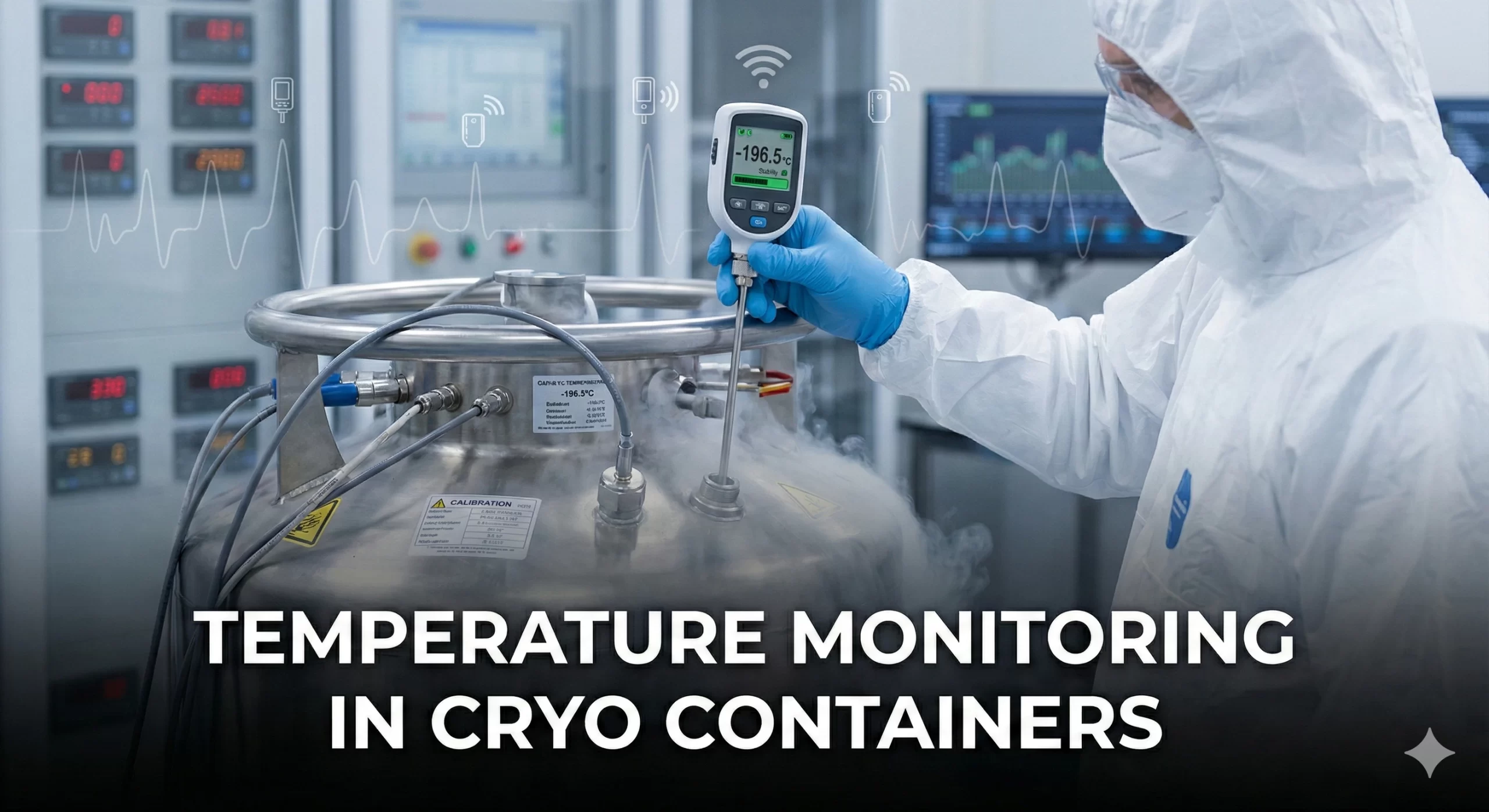
Let’s talk about something incredibly important in the world of cryopreservation, yet often overlooked because it feels “handled” once a system is set up: temperature monitoring in cryo containers. If you work in an IVF lab, a cryobank, or any facility storing embryos, sperm, oocytes, or tissues, you already know one universal truth, cryogenic storage is unforgiving. The smallest temperature fluctuation can make the biggest difference.
But here’s what typically happens: everything seems stable, alarms are silent, and storage containers are filled routinely. Over time, it’s easy to assume that as long as liquid nitrogen levels stay consistent, the samples are fine. The challenge is that temperature deviations aren’t always dramatic, loud, or noticeable. Sometimes they’re subtle, a minor shift inside the container that doesn’t trigger panic, but creates long-term risk.
So today, let’s sit down and walk through this topic. Why does temperature monitoring matter so much? How should it be done? And what best practices make the biggest difference in protecting what’s inside those cryo containers?
Request Monitoring Consultation
Why Temperature Monitoring Really Matters
Cryo containers aren’t just cold, they’re operating at temperatures near –196°C, which is essential for long-term biological stability. Embryos, eggs, sperm, and tissues are stored at this specific temperature because at that level, cellular metabolic activity essentially stops. That means no aging, no biochemical reactions, no deterioration.
But here's the important part:
Cryopreserved samples don’t fail suddenly, they fail when temperature fluctuates beyond safe thresholds, even briefly.
Maintaining the correct temperature isn’t just about the container being full of liquid nitrogen. It’s about consistency and control. Even small deviations, especially near the vapor phase, can impact viability.
Temperature monitoring matters because it:
- Prevents accidental warming
- Ensures regulatory compliance
- Protects patient trust and future family-building
- Reduces liability risks
- Supports predictable container performance
Without routine monitoring, the only indication of a failure might be too late, when storage conditions have already compromised biological material.
Let’s go deeper into the three core reasons temperature monitoring is non-negotiable.
1. Cryogenic Storage Only Works at Extremely Low Temperatures
The biology is simple: cells remain viable only if they stay below the glass transition temperature. For embryos, sperm, and oocytes, that threshold is around –130°C, well below freezing standards used in other fields.
If a container allows temperatures to rise above that, even temporarily, ice crystals may begin forming. These crystals can damage cell membranes, disrupt viability, and make the stored biological material unusable. Temperature monitoring ensures the environment stays consistently below that threshold.
Protect what matters most.
Get in touch with IVFCRYO today to ensure your samples are stored with the highest level of safety, monitoring, and care.
2. Failure Doesn’t Always Begin with a Full Breakdown
A cryo container rarely jumps from “perfect working condition” to “total failure.” Instead, failure often begins silently:
- Slight increase in evaporation rate
- Minor insulation loss
- Small drop in nitrogen fill level
- Sensor or alarm inconsistencies
Temperature trends help catch these early, before they become emergencies.
3. Monitoring Builds Accountability and Trust
People who store their reproductive tissue trust that it will remain safe whether stored for six months or several years. IVF clinics and storage facilities must demonstrate consistent reliability, temperature monitoring provides proof that samples were always preserved safely and responsibly.
This level of accountability becomes even more critical during transport. As discussed in our guide on factors to consider when choosing an embryo shipping partner, validated monitoring systems and documented temperature control procedures are essential for compliant and secure embryo shipment.
Best Practices for Temperature Monitoring in Cryo Containers
Now let’s shift into the practical part, what actually works. Monitoring shouldn’t be guesswork. It should be intentional, structured, and recorded.
Here are five best practices that make a significant difference.
1. Use Continuous Automated Monitoring Systems
Manual temperature checks may feel routine, but they aren’t enough. Modern cryo storage demands automated monitoring capable of tracking temperature in real time.
Automated monitoring ensures:
- Constant temperature tracking
- Immediate detection of anomalies
- Data consistency with no gaps
- Reduced human error
Ideally, these systems should also include:
- Cloud-based access
- Remote alerting
- Backup power support
This way, even if something happens outside working hours, someone will know immediately.
2. Establish Clear Temperature Thresholds and Alerts
Not all alarms are equal, and not all deviations are emergencies.
A good monitoring setup includes:
- Primary alerts: early warnings
- Critical alerts: urgent action required
- Fail-safe escalation: if one system fails, another communicates
Thresholds should align with biological safety limits and regulatory guidelines. That means alerts should trigger before the temperature reaches unsafe levels, not at the point of crisis.
A practical approach is to categorize alerts into:
- Stage 1: Slight deviation, monitor
- Stage 2: Measurable change, corrective action needed
- Stage 3: Critical deviation, immediate intervention
This structured alert system prevents confusion during emergencies.
3. Log and Audit Temperature Data Regularly
Monitoring doesn’t help if the data isn’t reviewed.
Logging temperature data helps identify patterns such as:
- Gradual vapor phase warming
- Rising nitrogen usage
- Increasing time between temperature recovery cycles
These trends usually indicate weakening insulation or aging equipment.
Auditing the logs monthly or quarterly gives clarity on whether the equipment remains safe or requires servicing, calibration, or replacement.
4. Train Staff and Standardize Response Protocols
Even the best monitoring technology is only as effective as the people using it.
Every team member should know:
- How to interpret temperature readings
- What to do when an alarm sounds
- Who to notify
- How to log corrective actions
- Where emergency tools and nitrogen access points are
Clear SOPs remove hesitation, confusion, and delay, especially during situations outside normal business hours.
5. Combine Monitoring With Preventive Maintenance
Monitoring isn’t a substitute for maintenance, they work together.
Preventive maintenance may include:
- Inspecting seals and lids
- Reviewing nitrogen boil-off patterns
- Checking insulation integrity
- Calibrating sensors and alarms
- Testing backup systems
When monitoring and maintenance align, cryo containers remain dependable long term, not just operational.
Keep Your Cryo Systems Running at Their Best
Schedule maintenance with IVFCRYO today and prevent failures before they happen.
Conclusion
Temperature monitoring in cryo containers isn’t just a procedural step, it’s a core responsibility. The materials stored inside represent something incredibly meaningful and irreplaceable. For many families, these cells and embryos are their only chance at a biological future. Because of that, monitoring the temperature isn’t optional or routine, it’s foundational.
By ensuring consistent temperature tracking, setting smart alert thresholds, reviewing data regularly, training staff, and pairing monitoring with preventive maintenance, labs build reliability into every part of the storage process.
So if you’re reading this and thinking, “Our system works fine,” that’s good, but the real question is: is it protected, monitored, and future-proofed?
Cryopreservation depends on stability. And stability depends on temperature control, every hour, every day, every year.
Most facilities benefit from scheduled maintenance every 6 to 12 months, depending on usage, equipment age, and storage volume. Some high-capacity or high-risk storage setups may require more frequent checks.
Our service typically includes evaporation rate monitoring, seal and lid inspection, alarm and sensor testing, calibration checks, nitrogen usage analysis, and a full performance evaluation with reporting.
Yes. Regular maintenance can significantly extend the life of cryo equipment by detecting early performance issues, preventing insulation loss, and reducing wear on critical components.
Yes. We offer support for urgent issues and system anomalies. If something changes suddenly, our team can step in to assess and stabilize the system to protect stored samples.
Absolutely. Proper documentation, calibration logs, and routine inspections help ensure compliance with regulatory, accreditation, and audit requirements for reproductive storage facilities.