
How Often Should You Replace Embryo Storage Containers?
Let’s be honest, embryo storage isn’t just another task in an IVF lab. It carries emotional, ethical, and clinical weight. These frozen embryos represent futures: future patients, future families, future lives. So when it comes to something as crucial as embryo storage containers, the one question many labs quietly avoid is: How long can these […]
Let’s be honest, embryo storage isn’t just another task in an IVF lab. It carries emotional, ethical, and clinical weight. These frozen embryos represent futures: future patients, future families, future lives.
So when it comes to something as crucial as embryo storage containers, the one question many labs quietly avoid is: How long can these containers stay in use safely? It’s not exciting to talk about, and sometimes it feels easier to assume that “as long as it’s not alarming, it’s fine.” But that mindset can turn into unnecessary risk.
So let’s walk through this topic in a clear, practical, and human-friendly way.
How Often Should You Replace Embryo Storage Containers?
Recommended Replacement Timeline
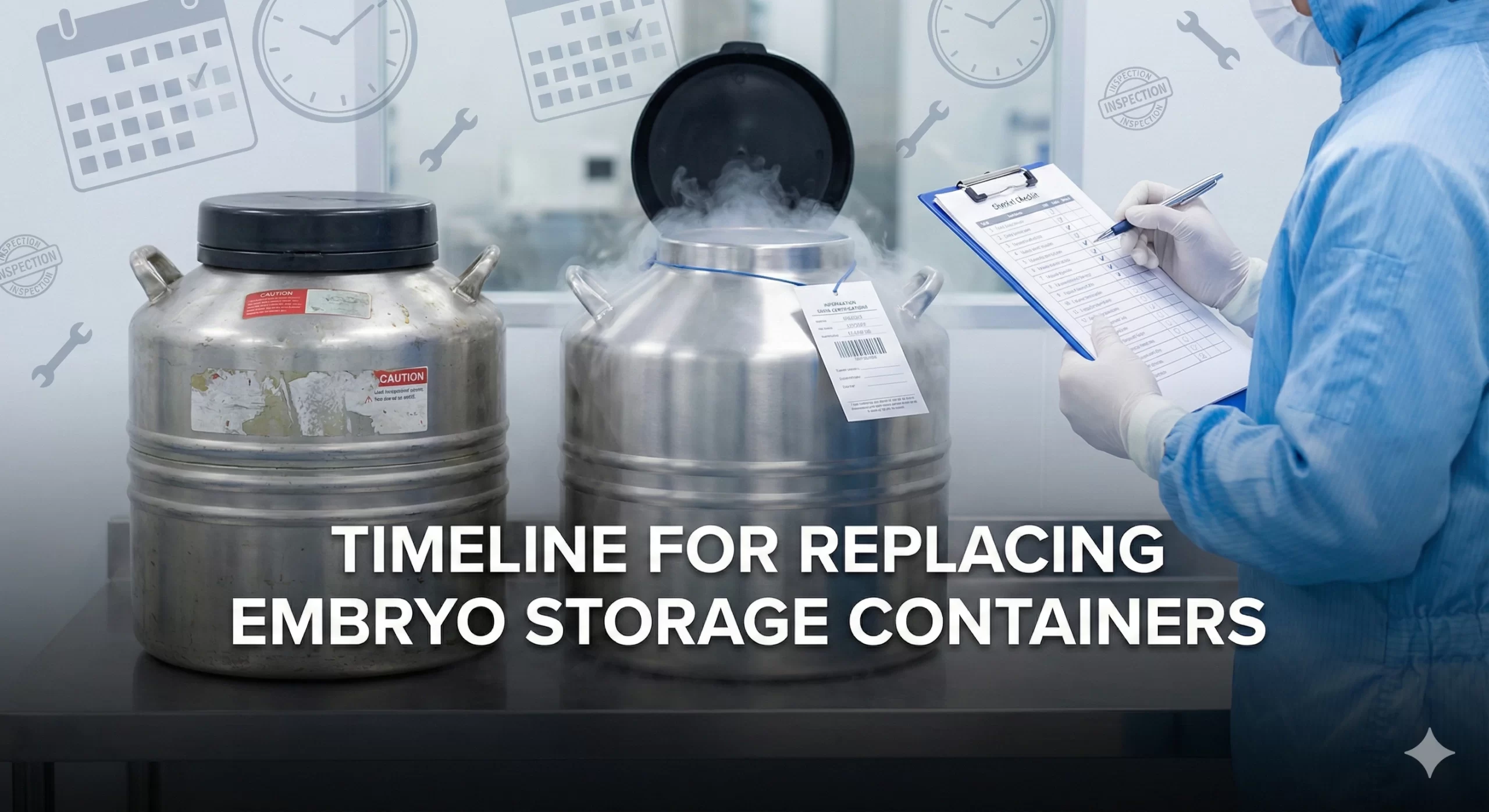
Most industry guidelines suggest replacing embryo storage containers every 8 to 12 years. This works as a reliable rule of thumb, but it’s not universal. Some newer, high-performance models with better insulation and upgraded construction can last 12 to 15 years. Older designs or heavily used containers may require replacement earlier, sometimes as early as 6 to 8 years.
Why There’s No Single Number
The lifespan isn’t only determined by time, it’s also determined by:
- How consistently the container is used
- How well it has been maintained
- Whether environmental conditions were controlled
- Trends in nitrogen consumption
So yes, there’s a timeframe, but condition always matters more than age.
Signs It’s Time to Replace
Performance Indicators to Watch
Even a container within its lifespan can begin showing subtle changes that signal it’s time to replace it. Common signs include:
- Gradual rise in liquid nitrogen usage
- Temperature inconsistencies
- Alarms triggering more frequently
- Unusual frost patterns
These are often early warnings rather than emergencies.
Physical Condition Clues
Some signs aren’t subtle at all:
- Dents or cracks
- Damaged lids or seals
- Worn insulation
- Corrosion or rust on exterior hardware
Once physical wear affects insulation integrity, replacement becomes urgent, not optional.
Ready to secure your embryos the right way?
Contact IVFCRYO today to explore custom long-term storage options and get peace of mind for your patients.
Maintenance Makes a Difference
Routine Maintenance Extends Lifespan
Unlike single-use items, cryogenic containers require care. Good maintenance habits can add years of reliability. Essential tasks include:
- Weekly evaporation and fill tracking
- Monthly temperature stability review
- Quarterly sensor calibration
- Annual written inspection report
A container with a clean, consistent maintenance history almost always performs better long term.
Why Data Tracking Matters
Most container failures don’t start suddenly, they appear slowly in the numbers. Trends like rising nitrogen consumption are usually the first clue that the internal vacuum insulation is weakening. This is why maintaining logs isn’t just documentation, it’s early-warning detection.
Keep your cryo-storage running flawlessly. Schedule your maintenance service today and avoid costly failures before they happen.
Book a maintenance professional now
Repair or Replace?
When Repairs Make Sense
Minor repairs are acceptable and sometimes expected. If a lid needs replacement, an alarm needs recalibration, or software needs an update, repairing is reasonable, especially if the container is still mid-lifespan.
When Replacement Is the Better Choice
A practical rule many labs use:
If repairs cost more than 25–30% of a new container, replacement is usually the smarter long-term decision.
Also, if repairs are repetitive or the same issue keeps coming back, the container isn’t reliable anymore, and reliability is non-negotiable in embryo storage.
Planning and Budgeting Ahead
Avoiding Emergency Replacement
Embryo storage containers are expensive, so replacing them shouldn’t feel like panic buying. That’s why planning matters. Replacement strategies usually fall into three categories:
- Time-Based Planning: Replace every 8–10 years
- Performance-Based Planning: Replace when metrics change
- Blended Approach: Use both age and performance data
The blended method offers balance: financial predictability plus safety.
Using Documentation as Decision Support
Tracking the following makes decisions easier and objective:
- Purchase date
- Warranty and service history
- Performance logs
- Alarm or incident reports
If someone can’t answer, “How old is this container?” without digging through emails, documentation needs improvement.
Don't Forget Backup Systems
Why Backups Are Not Optional
Even a brand-new container isn’t a guarantee of perfection. Every facility storing reproductive material should have:
- A backup tank
- Remote alarm systems
- Emergency nitrogen access
- Written response procedures
Redundancy isn’t paranoia, it’s professionalism.
Testing Preparedness
Having a backup plan doesn’t matter if no one knows how to use it. Labs benefit from scheduled drills, just like hospitals practice rapid response. It helps everything run smoothly if something unexpected happens.
The Role of Technological Advancement
Why Newer Models Are Worth Considering
Cryogenic storage technology is evolving. Modern containers now offer:
- Better vacuum insulation
- Reduced nitrogen evaporation rates
- Digital monitoring built-in
- Remote alerts and cloud-connected dashboards
- Stronger, more durable construction
So sometimes replacing isn’t about a failing unit, it’s about upgrading to something safer and smarter.
Future-Proofing the Lab
Replacing a container before it becomes unreliable isn’t waste, it’s investment. Labs must consider not only safety but also patient trust, compliance, and the long-term value of adopting better systems.
Conclusion
Embryo storage containers aren’t just another piece of equipment. They safeguard future possibilities, often stored for years with the expectation of absolute stability. Because of that responsibility, replacement shouldn’t be based on guesswork or urgency, it should be a deliberate, data-supported decision.
The most reliable approach is simple: monitor performance, maintain consistently, document everything, and plan ahead. If there’s even a moment of wondering whether a container is nearing end-of-life, that alone is a sign to review its condition. For embryo storage, it’s always better to replace early than regret being late.
Most embryo storage containers last around 8 to 12 years, depending on their build quality and how well they’re maintained. Some newer, advanced units may last up to 15 years, while older or heavily used models may need replacement earlier.
A gradual increase in liquid nitrogen usage is usually the first red flag. It means the insulation is weakening and the container is losing efficiency. Visible damage, repeated alarms, or temperature fluctuations are also clear signs.
Minor repairs like lid adjustments or alarm calibration are normal. But if a repair costs more than 25–30% of a replacement or the same issue keeps returning, replacing the container is safer and more cost-effective.
Absolutely. Containers with consistent monitoring, proper filling schedules, and documented inspections tend to last significantly longer and perform more reliably than those without structured maintenance workflows.
Yes. Replacement should be planned, not reactive. Since these containers store irreplaceable embryos, it’s safer to swap them proactively based on age and performance trends rather than waiting for visible failure or alarm events.